
Journal
Reading on connected health.
Older Adults
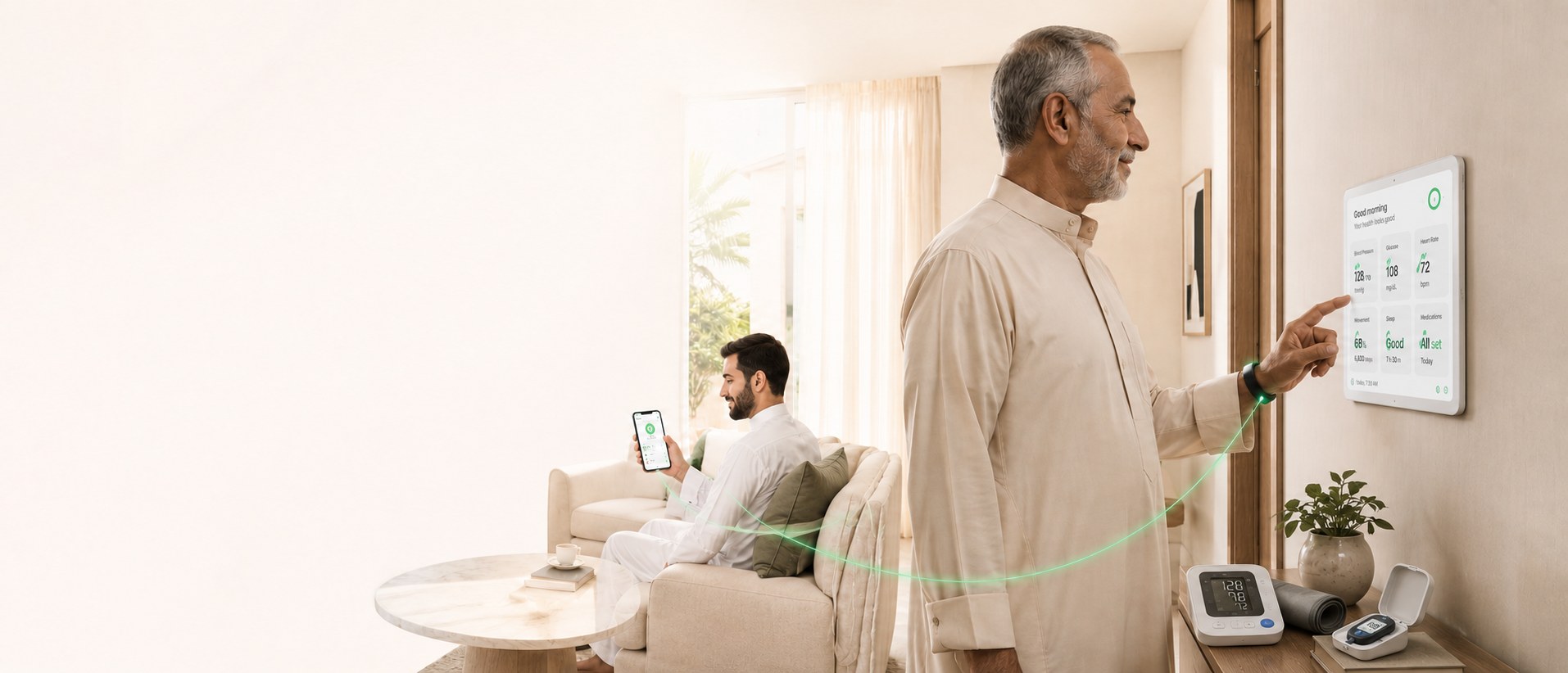
Growing older at home: technology that respects the person
Most older adults want one simple thing: to stay in their own home with dignity. Technology should support that wish, not take it over.
People of Determination: Motor
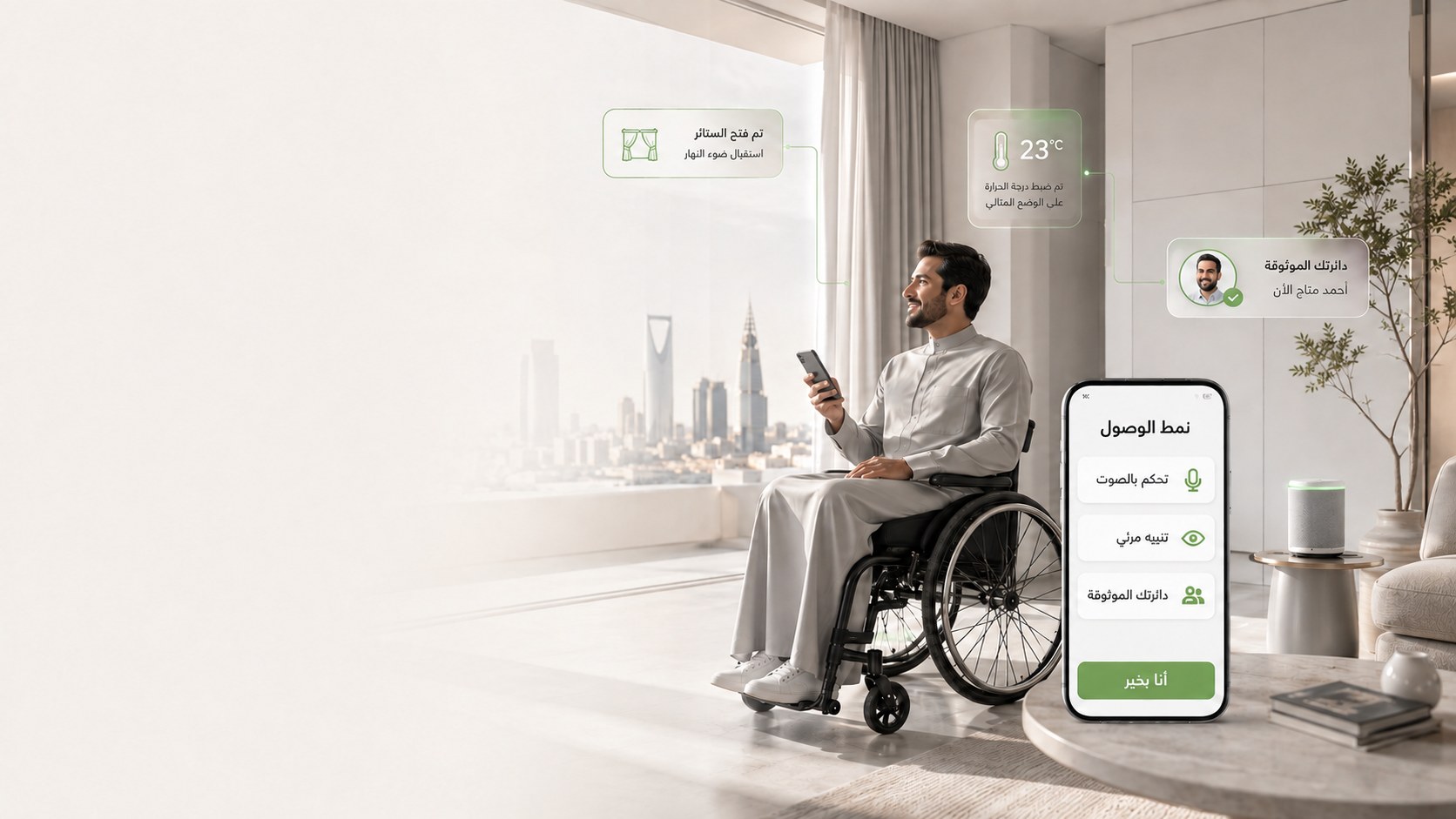
When movement is hard: a home that meets you halfway
For someone whose movement is measured effort, every unnecessary step saved is a gain. A smart home here is not luxury, it is independence.
People of Determination: Hearing
A home you can see when you cannot hear it
Most alerts in our homes are sound. For someone who does not hear, the answer is not a louder tone, it is turning information into something seen and felt.
People of Determination: Speech
Being understood without speaking a word
Many systems today wait for a spoken command. For someone who cannot speak, or finds it hard, there must be another path with the same dignity.
Personal Baseline
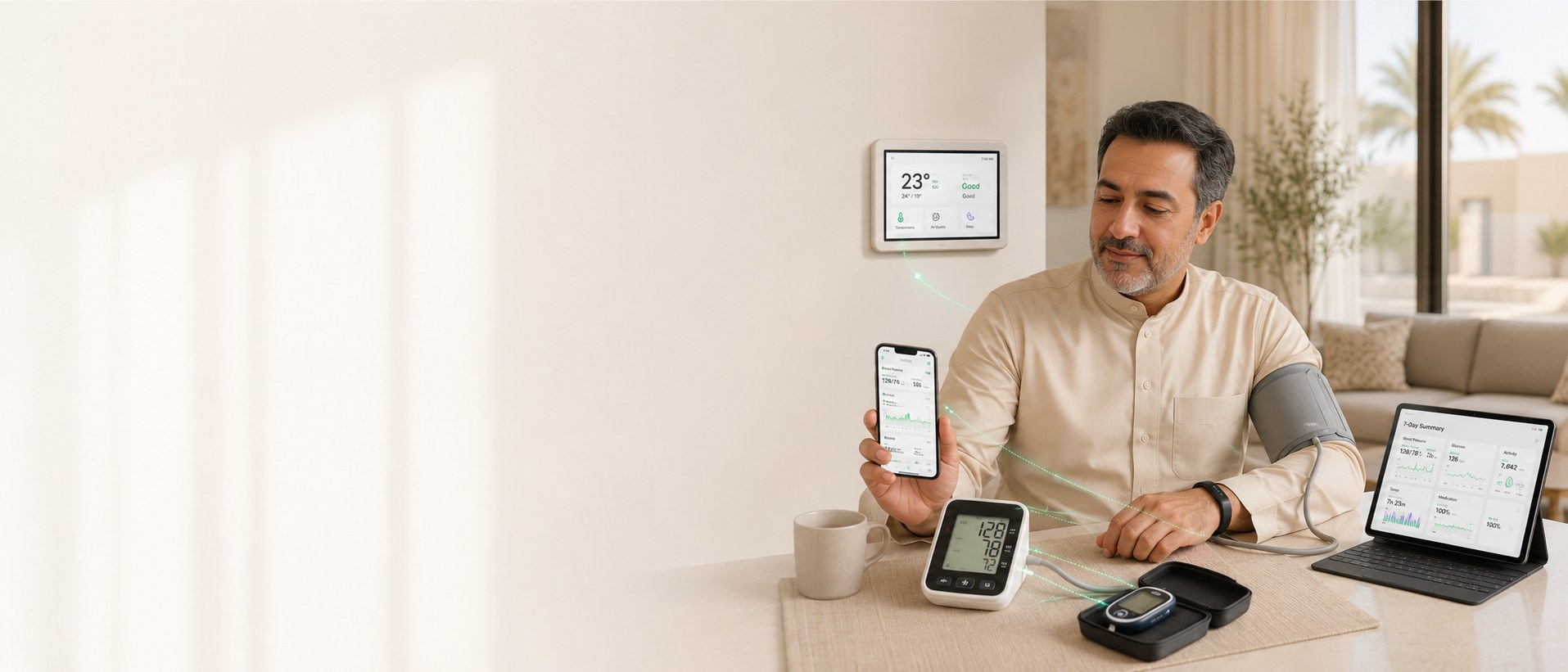
What a personal baseline is, and why one reading is not enough
A single reading is one moment in a whole day. A personal baseline is what makes a change meaningful.
People of Determination: Vision
A home that speaks when the eyes cannot read it
Visual interfaces assume you are looking. For someone who does not see, the same information must arrive through sound and touch, in a clear order you can rely on.
Trusted Circle
Building a trusted circle: who your home reaches, and how
The goal is not to notify everyone. It is to reach the most suitable person with the minimum necessary information.
People of Determination: Sensory
A calmer home for a sensitive nervous system
For some people, harsh light and sudden sound are not a passing annoyance, they are real strain. A home can be a source of calm rather than overload.
Safety First
Test mode: trying a response plan before it is needed
The best time to understand how response works is before you need it, without sending any real alert.
People of Determination: Cognitive
Gentle structure for memory and focus
Good cognitive support does not decide for a person, it makes deciding simpler. A timely reminder and one clear step are worth more than a long list.
Adaptive Environment
When the home adapts to you, not the other way round
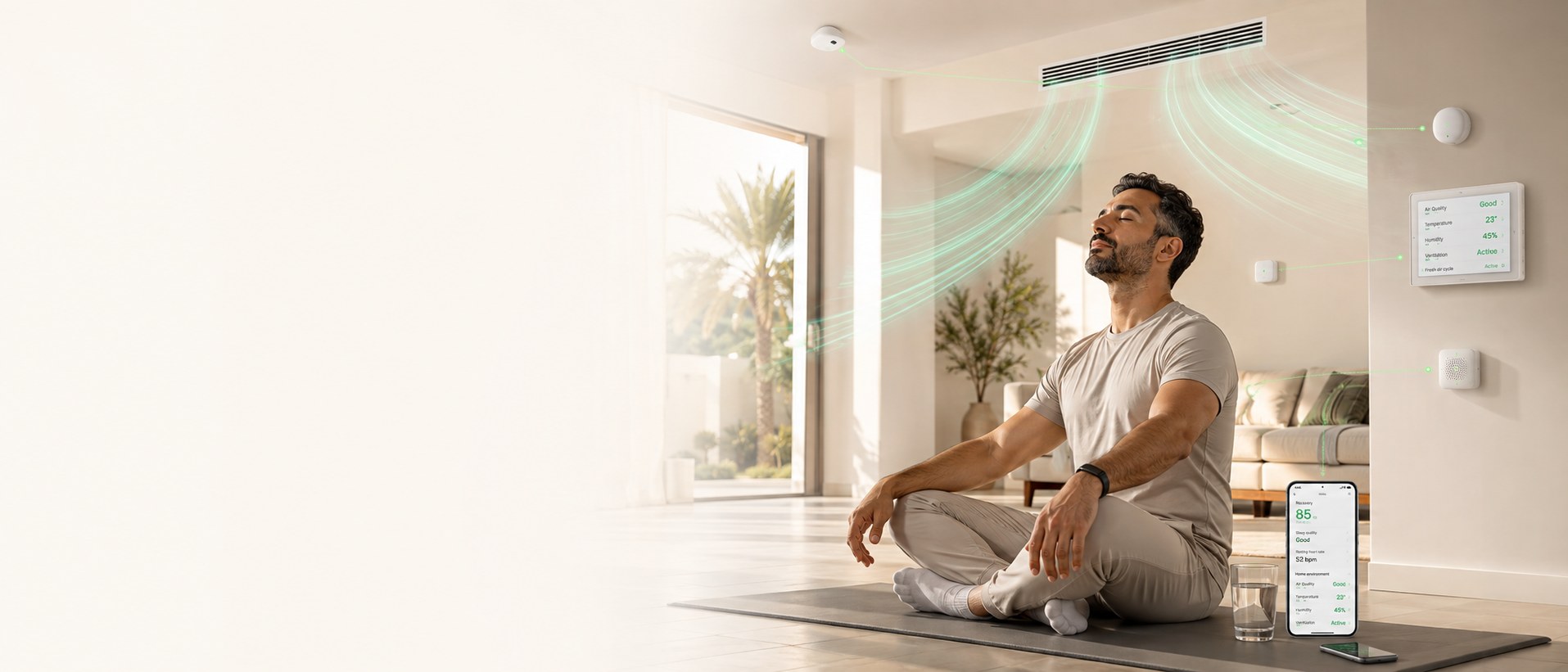
A truly smart home does not just wait for your commands. It adapts to your state and routine, with your consent.

Privacy
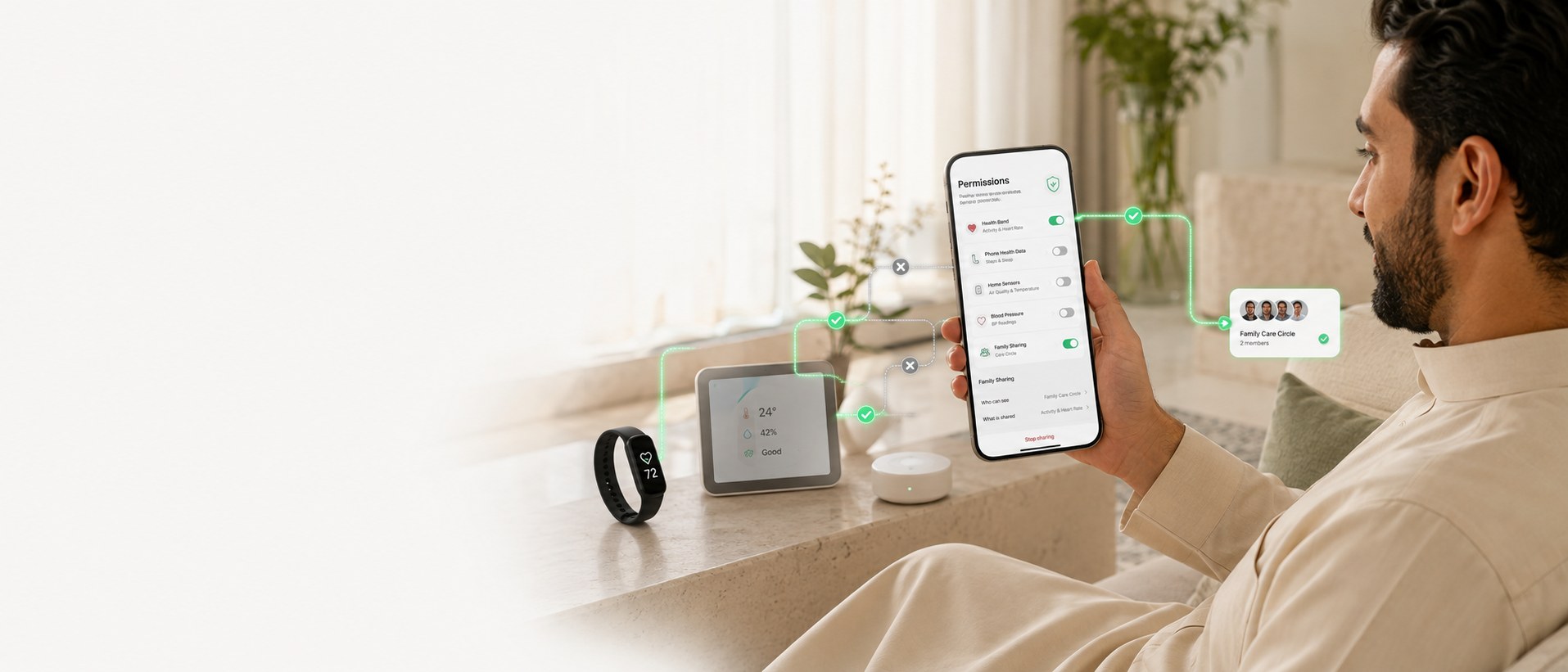
Consent first: connecting only what you choose
Data is not collected just because it is available. Every source starts with a clear choice, and can be stopped at any moment.
Connected Health
Your home is the missing piece in everyday health
Most health apps read only your body. Yet the air, temperature, humidity and movement around you shape much of how you feel each day.
Sleep & Environment
Air quality and how it affects your sleep
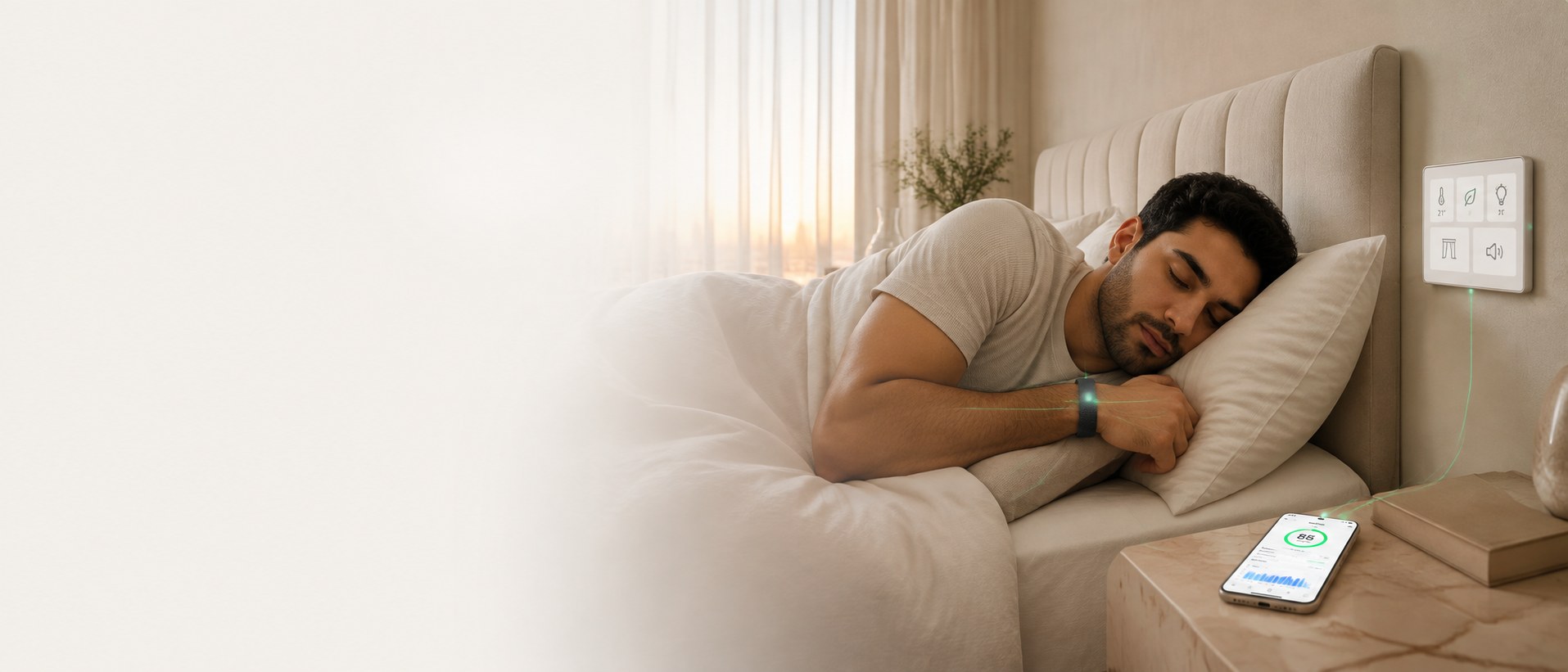
A bad night of sleep is not always about stress. Sometimes it is about the air you breathe while you rest.
Understanding Data
What connected health data can and cannot tell you
Gathering data is a first step, but understanding its limits matters just as much. Data supports decisions, it does not replace a clinician.
Older Adults
Motion sensors and older adults: support without surveillance
The goal is not to watch the home. It is to respect independence while reassuring family, with clear consent from the person the data belongs to.
Chronic Conditions
Read your blood pressure trends, not single readings
A high reading in a stressful moment does not mean much on its own. Context across days is what builds a clearer picture.
Privacy
Building a privacy-first health routine
Health data is among the most personal you have. Privacy is not a setting buried in a menu. It is a foundation the whole experience is built on.