
People of Determination: Hearing · 28 August 2026
A home you can see when you cannot hear it
Most alerts in our homes are sound. For someone who does not hear, the answer is not a louder tone, it is turning information into something seen and felt.
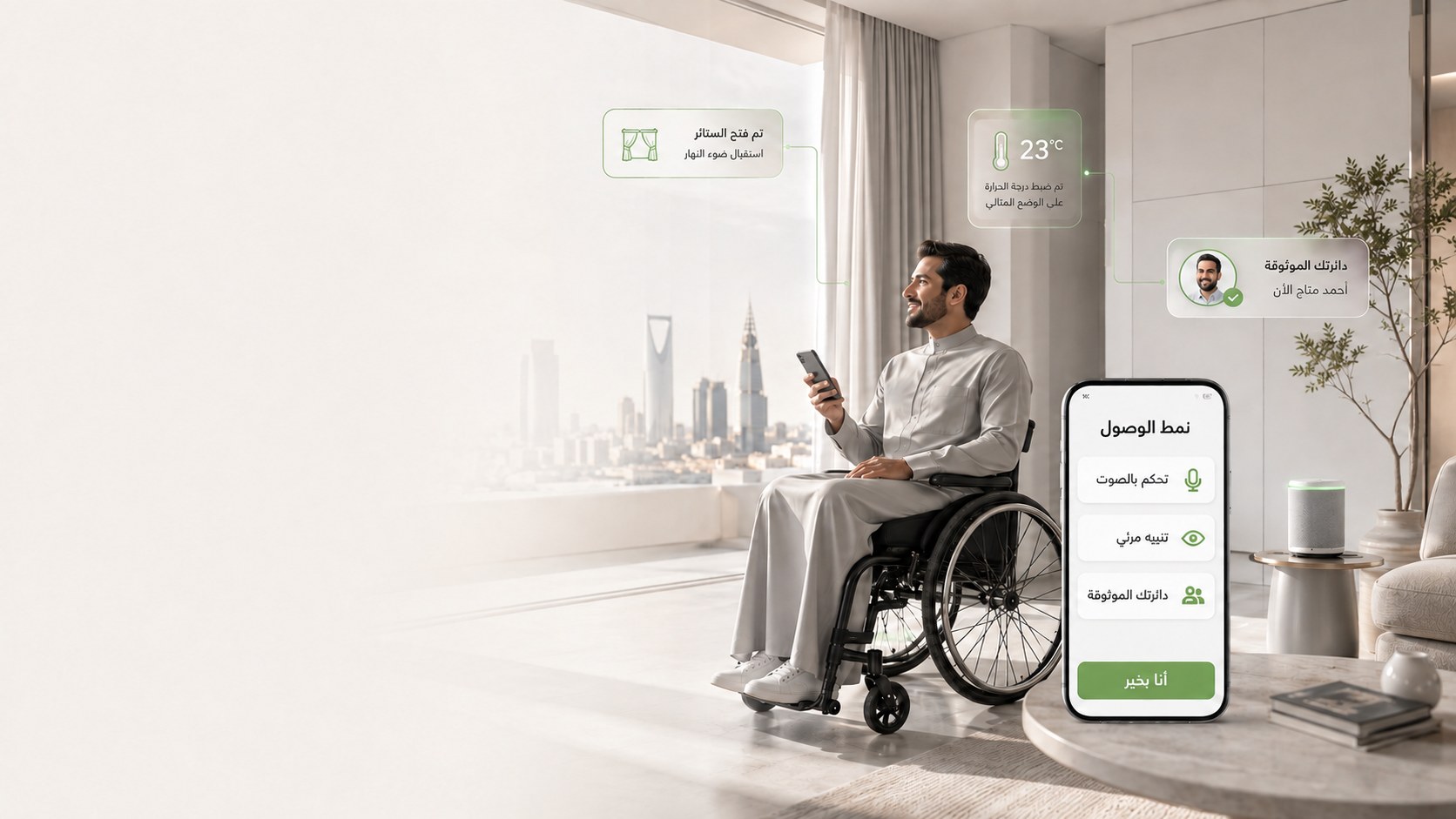
The doorbell, an appliance beep, a smoke alarm, a ringing phone. A home is full of sounds we rely on without noticing. Someone living with a hearing disability loses this entire layer, and with it a measure of safety and independence.
The answer is to translate every sound into another channel: a light flash in an agreed color, a vibration in a watch or phone, a clear on-screen notice that says what happened and where. The same information arrives, but in a language the body understands.
What matters most is that this translation stays consistent and legible. A specific color for the doorbell, a distinct vibration pattern for an important alert, so the user learns them easily and trusts them. Clarity here is a condition for reassurance.
And in a moment of need, asking for help should not depend on a voice call. Text and visual contact with the trusted circle, with a visual confirmation that the message arrived and someone is on the way, gives confidence no less than any sound. A home that is clearly seen can be every bit as safe as a home that is heard.
This content supports understanding and general follow-up. It is not a diagnosis or treatment and does not replace professional advice.