
Sleep & Environment · 18 August 2026
Air quality and how it affects your sleep
A bad night of sleep is not always about stress. Sometimes it is about the air you breathe while you rest.
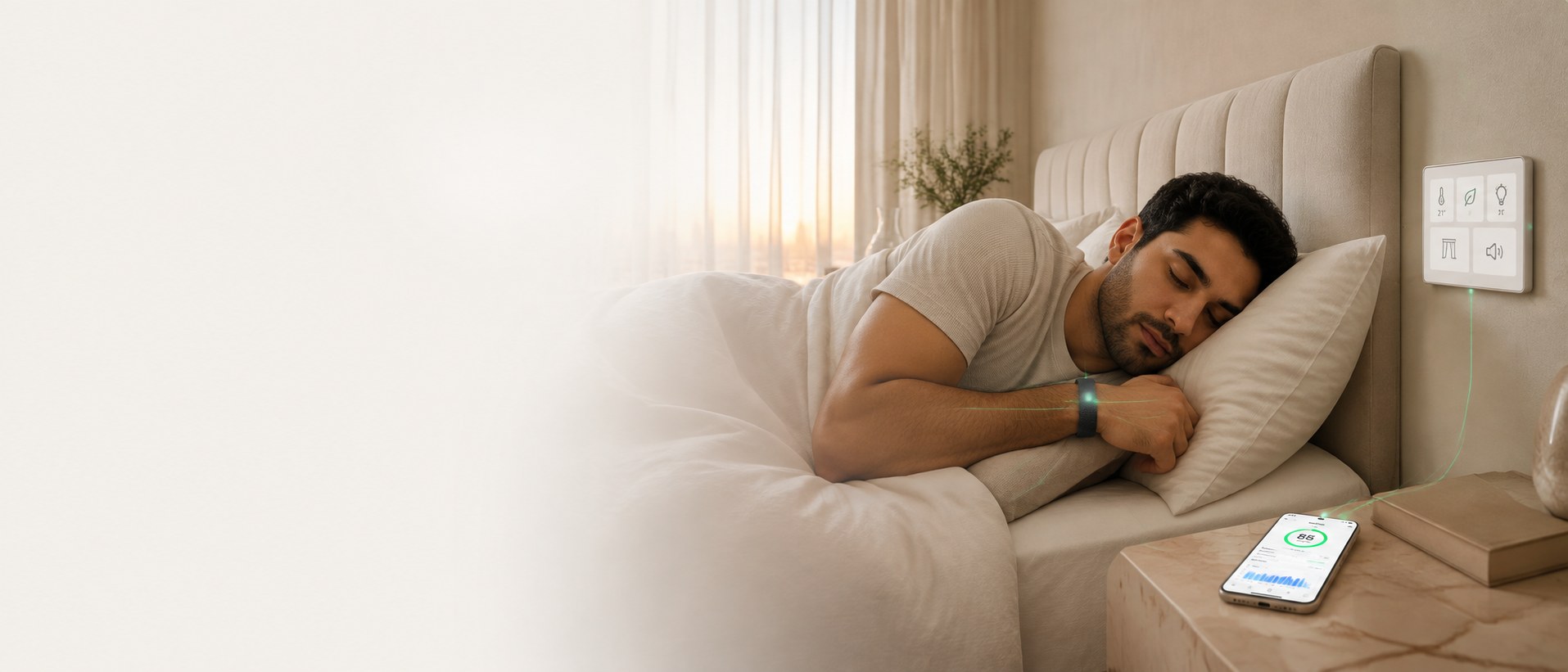
We spend about a third of our lives asleep, usually in a closed room for hours at a time. During those hours, carbon dioxide rises, humidity shifts, and fine particles can build up in the air. All of this happens while you are completely unaware of it.
General research on indoor air quality links good ventilation to deeper sleep and feeling better on waking. The problem is that most of us have no way to see these factors, so we blame poor sleep on stress or caffeine alone.
When you connect air-quality, temperature and humidity sensors to your sleep experience, the picture gets clearer. Across several nights, you can see when the air was good and how that reflected on your recovery.
The practical step is simple: watch the trend across days, not a single night. Recurring patterns are the ones worth acting on, such as improving ventilation before bed or adjusting the room temperature.
This content supports understanding and general follow-up. It is not a diagnosis or treatment and does not replace professional advice.