
People of Determination: Speech · 27 August 2026
Being understood without speaking a word
Many systems today wait for a spoken command. For someone who cannot speak, or finds it hard, there must be another path with the same dignity.
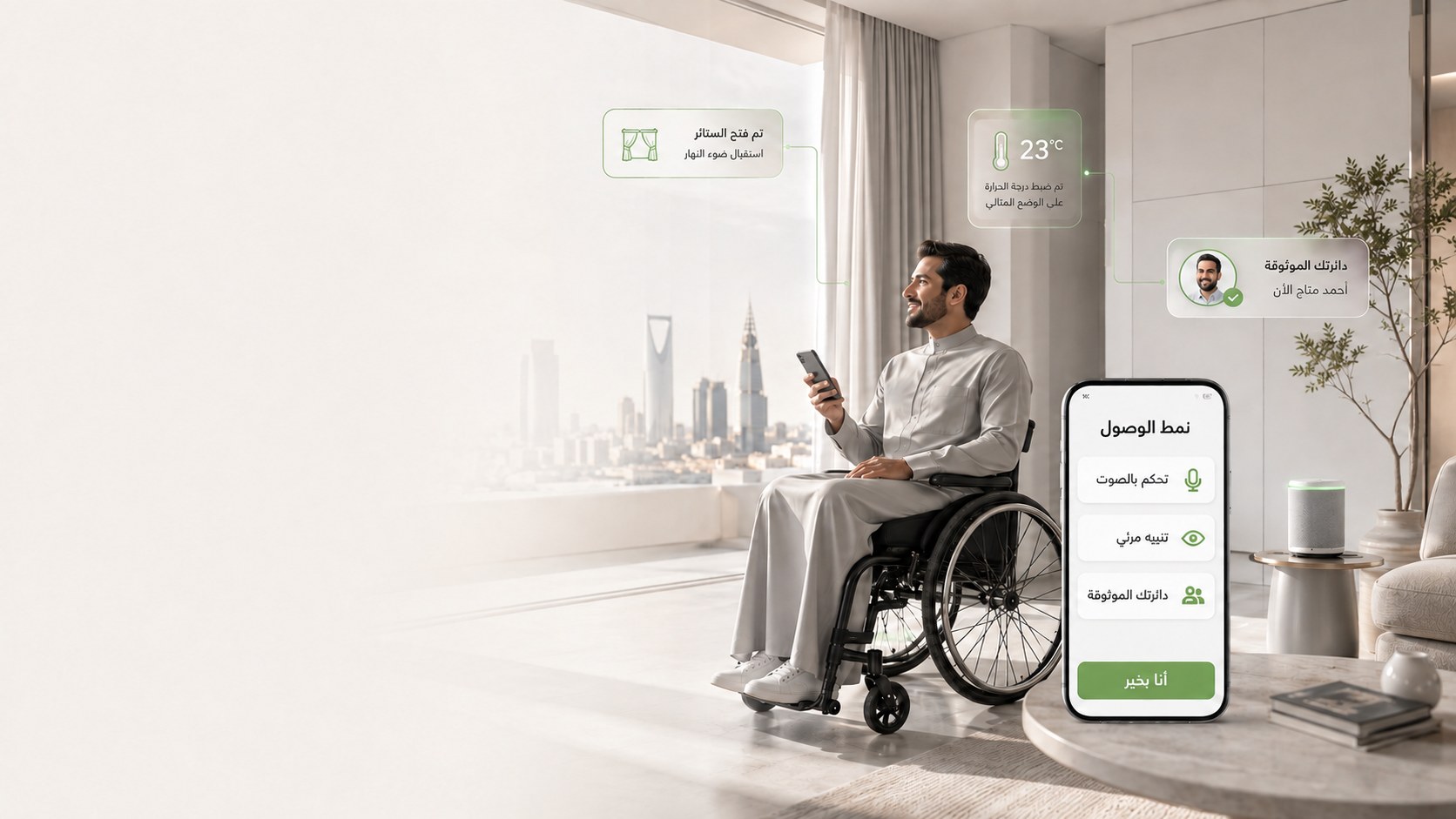
Voice has become a primary interface for technology: say this, ask for that. But when the ability to speak is limited, this convenience turns into a barrier. The problem is not the user, it is a system that assumes only one way to express intent.
A home that respects everyone offers more than one input: a touch, a gesture, a choice on a screen, buttons dedicated to frequent tasks, or ready phrases the user composes in advance to express something quickly. The idea is that every intention has a clear path that does not necessarily pass through the voice.
In communicating with others, this makes a real difference. Being able to send a specific message with a single touch, or trigger an agreed sequence, means a person expresses a need without exhausting themselves or waiting for someone to translate.
And in an emergency especially, response should never hang on a spoken sentence. A silent, clear request that reaches the trusted circle with enough information can be faster and safer. To be understood without speaking is not a luxury, it is a form of respect.
This content supports understanding and general follow-up. It is not a diagnosis or treatment and does not replace professional advice.