
People of Determination: Vision · 26 August 2026
A home that speaks when the eyes cannot read it
Visual interfaces assume you are looking. For someone who does not see, the same information must arrive through sound and touch, in a clear order you can rely on.
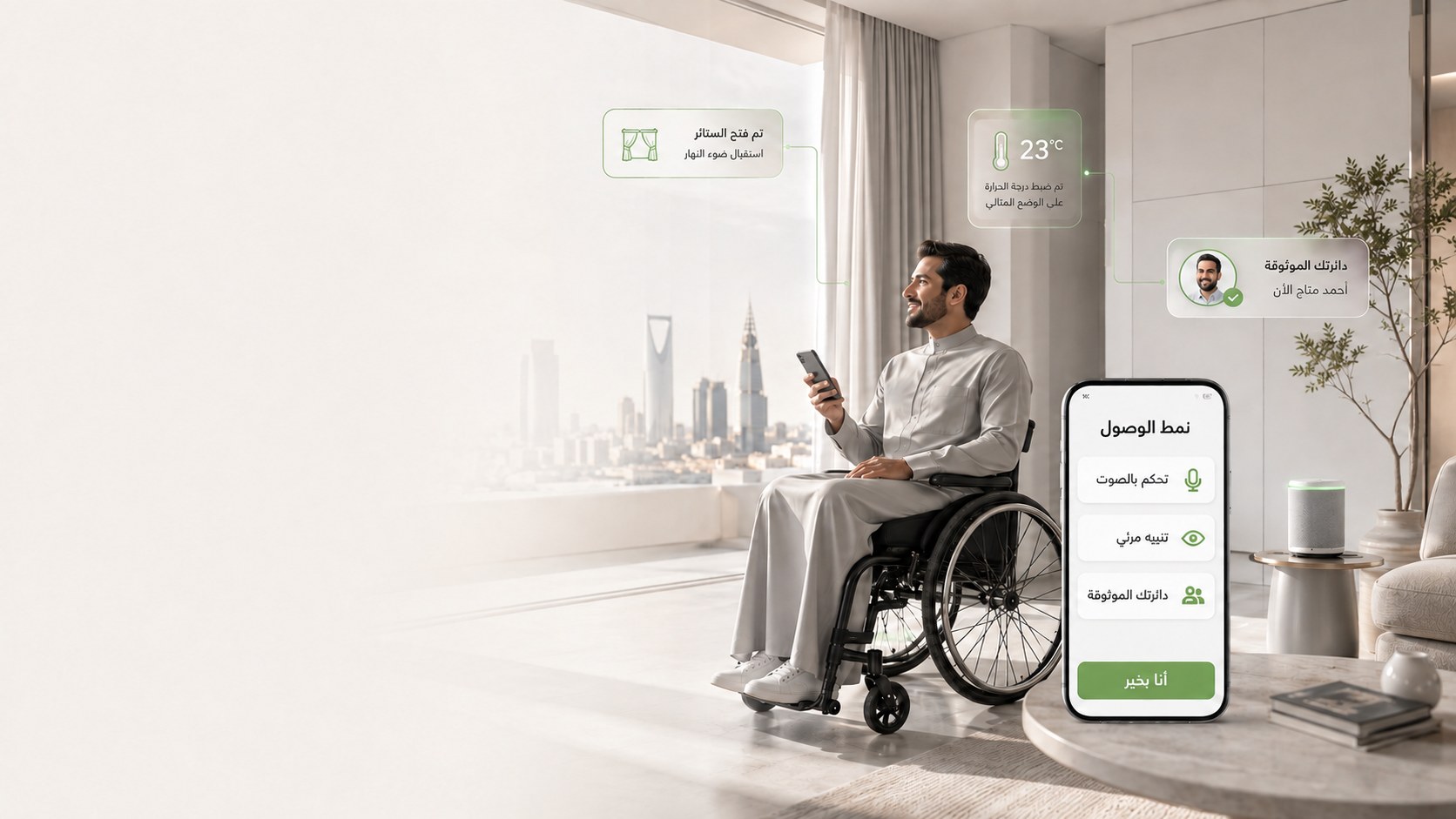
Most smart devices speak the language of the screen: icons, colors, menus. Someone living with a visual disability does not need a clearer screen, they need a different path to the same information, a path that is heard, felt and ordered.
This means a design that works fully with a screen reader, reliable voice commands, and spoken responses that describe state precisely: the door is locked, the temperature is set, the air quality is good. Good description is not decoration, it is the whole interface.
Order and consistency matter as much as sound. When everything has a predictable place and a clear, unchanging name, the user builds a mental map of the home they can trust. Surprises in design are an extra burden on someone relying on memory and hearing.
And in important situations, an alert must be announced clearly in sound, and the response must be actionable without sight: a spoken confirmation that the message arrived, who is coming, and when. When a home speaks a clear language, it becomes a place managed with confidence, not guesswork.
This content supports understanding and general follow-up. It is not a diagnosis or treatment and does not replace professional advice.