
Older Adults · 30 August 2026
Growing older at home: technology that respects the person
Most older adults want one simple thing: to stay in their own home with dignity. Technology should support that wish, not take it over.
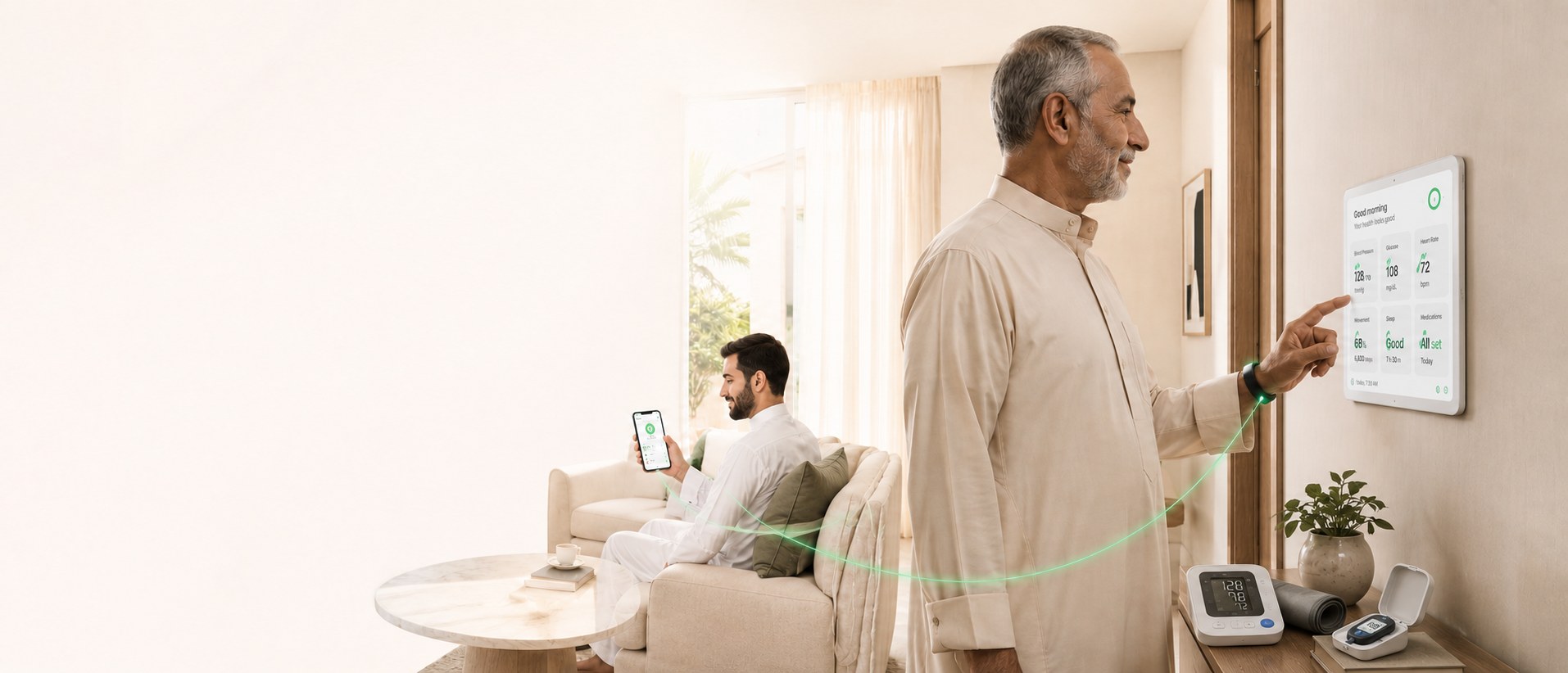
When a parent grows older, worry changes shape at home. A call that goes unanswered, a voice we have not heard since morning, a step that takes longer than it used to. We do not want to watch over them, and at the same time we fear missing something. That distance between reassurance and intrusion is what technology has to understand first.
The idea is not a camera in every corner. It is a home that learns the shape of an ordinary day: when someone wakes, when they move in the kitchen, when they settle in the evening. When an activity that usually happens is missing, the system notices the difference quietly and starts by checking in with the person themselves before disturbing anyone else.
Dignity means the person stays the one who decides. They set who sees what, when an alert travels, and which information is shared. A son living far away can see that things are fine without being handed the small details of a day.
And it is only honest to be clear about limits. These are tools that support reassurance and follow-up. They are not an emergency service and not a substitute for care. When help is genuinely needed, calling emergency services or a care provider remains the right step. The best technology for older adults is the kind that does not make them feel watched, but makes them feel less alone.
This content supports understanding and general follow-up. It is not a diagnosis or treatment and does not replace professional advice.